ToolRoutine, a catalog of 106 AI plugins I build and run
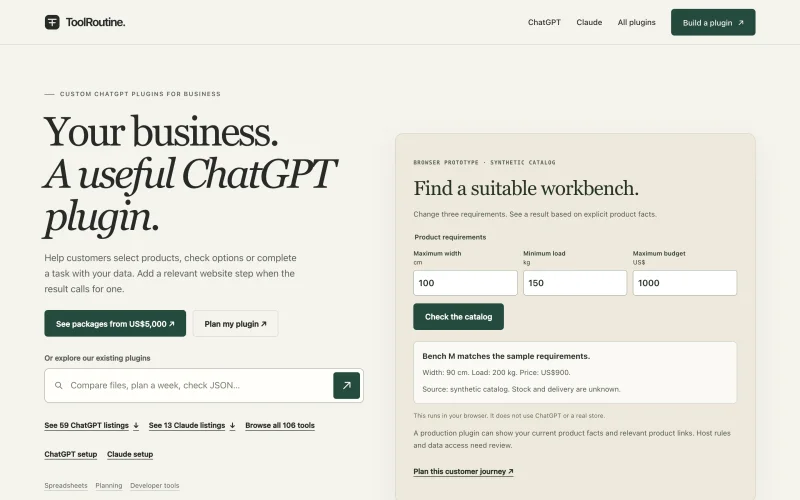
ToolRoutine is the public home of the plugins I build for ChatGPT and Claude, from invoices to NOAA tide tables. I make every part of it alone in Warsaw, from the generator and the quality gates to the Workers, the site and the numbers on it.
One Worker per plugin, one page per Worker
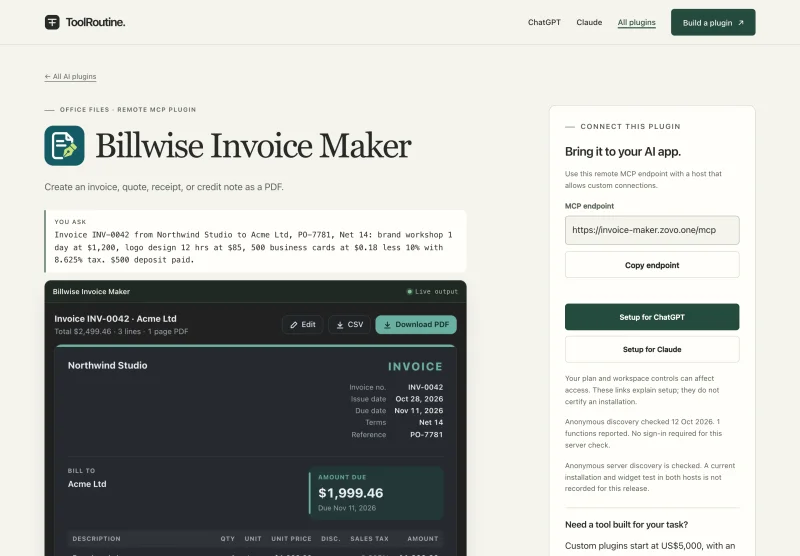
Each plugin is a small remote MCP server on its own Cloudflare Worker, such as invoice-maker.zovo.one/mcp. ChatGPT or Claude connects to it, and the plugin answers with a widget and a file, a PDF, a CSV or a spreadsheet.
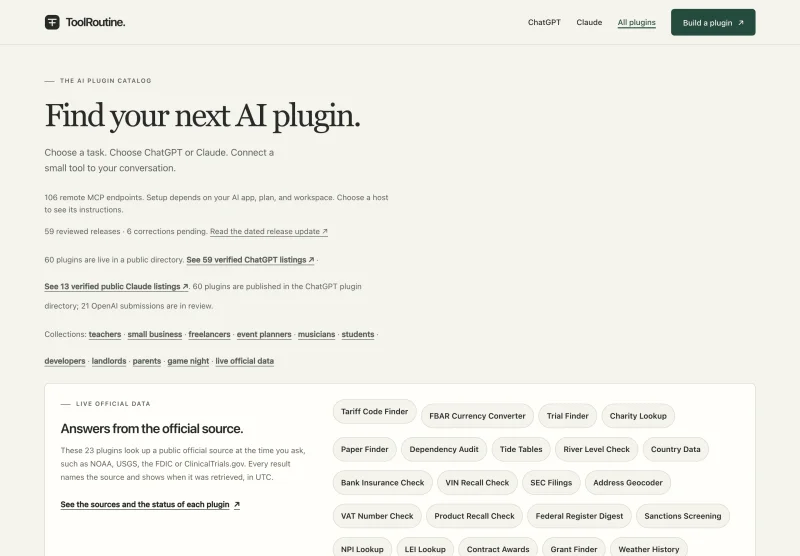
ToolRoutine lists all 106 in six task groups, from office files to developer tools. Each page shows a sample prompt, the address to connect and a window from the live plugin. The site is a static Astro build on Cloudflare Pages with 131 URLs in its sitemap.
23 of the plugins read a public official source at the moment you ask, such as NOAA tides, USGS river gauges or FDIC bank records. Every result names the source and the time it was read.
From an idea to a live page
A plugin starts as a job people repeat. Before I write any code I give the same job to plain ChatGPT. In the run of 2 November it got 8 of 10 live data jobs exactly right, so a plugin has to win on completeness and speed. Country Data returned its result in 32 seconds, plain ChatGPT in 177.
One command makes the plugin folder on a shared runtime. The ship command builds it, checks its licenses, probes it locally, deploys the Worker, probes it again on the live address and packages it for the two directories.
Then a fresh reviewer agent scores the exact source that ships. A critical finding costs 25 points, and the pass line is 95 with no critical or major finding. Findings go to a fixer and the round starts again. On 2 November ten plugins went from a mean first score of 52.7 to 83.0 in four hours, and three passed.
Every number on a page comes from a live check
The catalog is one JSON file, and I don’t type its facts by hand. A discovery step asks each live Worker for its tools without signing in, which is where the count of 228 functions comes from. A store check reads which directory listings are public.
A capture tool sends the sample prompt to the live plugin, renders the reply in a headless host and saves it in light and dark. The invoice and tide windows in the screenshots are those captures, from 28 October and 2 November.
The build writes llms.txt, a sitemap with real change dates and a SHA-256 hash for each inline script, so the content security policy allows only the code it has seen. Google Analytics loads only after a visitor agrees.
Who uses it
In the 7 days to 3 November, 335 distinct users ran the plugins in ChatGPT, up from 236 the week before, and 610 in the last 30 days. ChatGPT and Claude ran the tools 2,457 times in that week, and 97% of the ChatGPT runs returned a result, not an error.
71 plugins are public in the ChatGPT directory and 19 in Claude. The site went from 55 plugins on its first day, 11 October, to 106 on 2 November.
Evidence
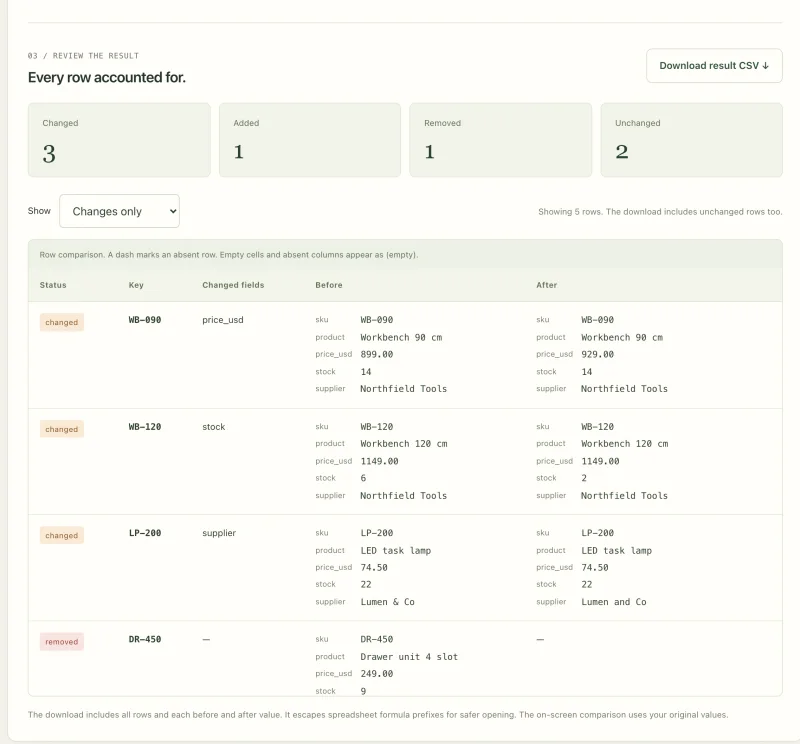
toolroutine.comThe catalog, 106 plugins in six task groupsBillwise Invoice MakerA plugin page with a window captured from the live pluginZovo Tide TablesLive NOAA data, with the source and the time it was readCSV comparerA tool that runs in the browser and keeps files in memoryMeasured numbersUsers and tool runs, read on 4 November 2026llms.txtWritten at build time from the catalog
My own product. I took the screenshots on 5 November 2026 from the live site. The CSV comparer shows made-up product rows that I typed in.